
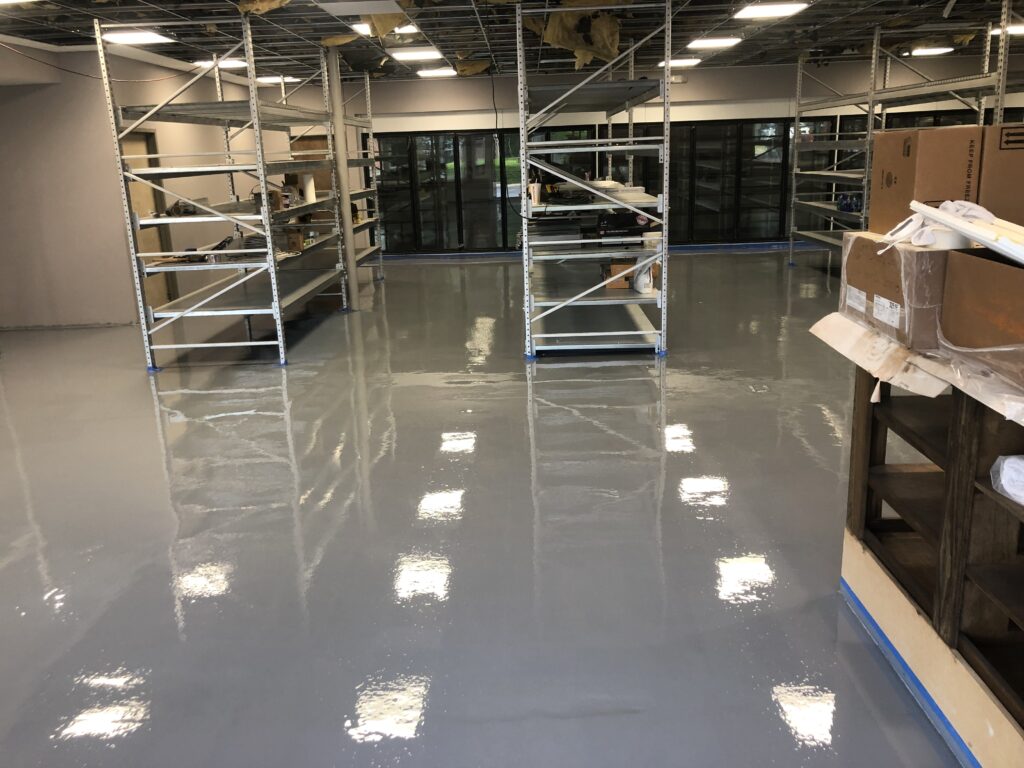
For the cook line, dish area, and any space with hot water washdowns, urethane cement is the better restaurant kitchen floor. It expands and contracts at nearly the same rate as concrete, handles hot oil and steam cleaning, and tolerates moisture in the slab. Epoxy works well in dry, moderate-temperature areas like dry storage, restrooms, front of house, and lighter-duty kitchens such as delis and ice cream shops.
Urethane cement typically costs about $8 to $17 per square foot installed for kitchen-sized projects, compared to about $4 to $10 for epoxy. Many restaurants use both, putting urethane cement where heat and water hit the floor hardest and epoxy everywhere else.
Urethane Cement vs. Epoxy Side by Side
Here is how urethane cement vs. epoxy compares on the conditions restaurant kitchens deal with every day:
| Factor | Urethane Cement | Epoxy |
|---|---|---|
| Heat tolerance | Rated to about 200 to 250°F depending on thickness, and handles steam cleaning | Typically rated to about 140°F continuous |
| Thermal shock | Excellent, moves with the concrete | Best where temperatures stay steady |
| Slab moisture | High tolerance | Needs testing and often a mitigation primer |
| Thickness | Heavy-duty builds often 1/4 inch or more | Thinner film systems |
| Appearance | Mostly functional solid colors, with some quartz and flake options | Wide range of colors, flakes, and decorative finishes |
| Typical installed cost | $8 to $17 per sq ft | $4 to $10 per sq ft |
| Best fit | Cook lines, dish pits, walk-ins, washdown areas | Dry storage, restrooms, dining areas, light-duty kitchens |
Why Urethane Cement Handles Hot Kitchens
A restaurant kitchen floor goes through extreme temperature swings every shift. Hot fryer oil hits the floor, then cold water washes it down at close. Walk-in coolers and freezers sit steps away from ovens and ranges.
Urethane cement flooring handles those swings because it expands and contracts at nearly the same rate as the concrete underneath. The floor and the slab move together, so the bond holds through daily heat and cold. A thicker build also absorbs impact from dropped pans and heavy equipment.
Key advantages in a working kitchen:
- Thermal shock resistance for hot spills, steam cleaning, and cold washdowns
- Moisture tolerance on slabs that stay damp from constant cleaning
- Resistance to grease, food acids, and sanitizers used in daily cleaning routines
- Textured, slip-resistant surfaces built in with broadcast aggregate
- Quick return to foot traffic, often within 12 to 24 hours
A kitchen floor has to move with the concrete. Urethane cement is built to do exactly that.
Where Epoxy Works Well in Food Service
Epoxy is a strong, seamless, easy-to-clean floor for food service spaces that stay dry and hold a steady temperature. It also gives you far more design options, which matters in guest-facing areas.
Epoxy is a great fit for:
- Front of house and dining rooms, where decorative flake or metallic finishes add style
- Restrooms, especially with a textured flake or quartz floor system
- Dry storage and office areas away from heat and standing water
- Light-duty kitchens like delis, coffee shops, and ice cream shops with moderate cleaning temperatures
Quartz-filled epoxy systems add texture and toughness for prep areas that see some moisture but not heavy heat. Learn more about commercial epoxy flooring options for food service.
Choosing Restaurant Kitchen Flooring by Zone
The best restaurant kitchen flooring plan matches the floor to each zone of the building:
| Kitchen Zone | Recommended System |
|---|---|
| Cook line, fryers, and ovens | Urethane cement |
| Dish pit and washdown areas | Urethane cement |
| Walk-in coolers and freezers | Urethane cement |
| Prep areas with moderate temperatures | Urethane cement or quartz-filled epoxy |
| Dry storage and offices | Epoxy |
| Restrooms | Flake or quartz epoxy |
| Dining room and front of house | Decorative epoxy |
Zoning puts your budget where it does the most work, with heavy-duty systems only where heat and water demand them.
Cost and Downtime for Kitchen Floors
Urethane cement typically runs about $8 to $17 per square foot installed for kitchen floors, and epoxy runs about $4 to $10. Smaller kitchens often price higher per foot because setup and prep costs spread across less floor. In our commercial epoxy flooring cost guide, urethane cement for spaces under 1,500 square feet runs $11 to $17 per square foot.
Downtime matters just as much as cost for a restaurant. Urethane cement can often take foot traffic within 12 to 24 hours, which makes it possible to plan work around your slowest days. The right choice upfront also protects your schedule long term, since putting epoxy in a hot, wet zone usually means replacing it sooner.
Details That Matter in Any Kitchen Floor
Beyond the system itself, these details decide how well a commercial kitchen floor performs and how easily it passes inspection:
- Integral cove base: Running the floor a few inches up the wall creates a seamless, sanitary edge with no gap for water or debris.
- Drains and slope: The floor should tie cleanly into floor drains and trench drains so water moves off the surface.
- Slip texture: Aggregate broadcast into the floor adds traction for wet, greasy conditions, and the texture can be tuned to each zone.
- Removing old flooring: Quarry tile, grout, and old coatings come up first. Floor preparation and old coating removal leave clean concrete for a strong bond.
- Sanitary surface: Health inspectors look for floors that are smooth, durable, nonabsorbent, and easy to clean. Both seamless systems meet that need when installed correctly.
Kitchen Flooring FAQs
Is urethane cement better than epoxy for a restaurant kitchen?
For hot, wet areas like cook lines and dish pits, yes. Urethane cement handles thermal shock, steam cleaning, and slab moisture far better. Epoxy is a great choice for dry, moderate-temperature areas.
Can epoxy be used in a commercial kitchen?
Yes, in the right areas. A properly specified epoxy works well in kitchens with moderate cleaning temperatures and minimal thermal cycling, plus dry storage, restrooms, and dining areas.
How much does urethane cement flooring cost?
Urethane cement typically costs about $8 to $17 per square foot installed for kitchen-sized projects. Smaller kitchens often land higher per foot, and the final price depends on prep, thickness, cove base, and drain work.
How long does a kitchen need to close for new flooring?
Urethane cement can often take foot traffic within 12 to 24 hours. Total closure depends on removal of old flooring, repairs, and the size of the kitchen, and many projects can be scheduled in phases.
Can urethane cement go over quarry tile?
In most cases, old tile and grout are removed first so the new floor bonds directly to sound concrete. A walkthrough confirms the best approach for your kitchen.
Get the Right Floor for Your Restaurant Kitchen
Buckhead Stone Care installs urethane cement and epoxy flooring for restaurants, commercial kitchens, and food service spaces across Atlanta, Milton, and Athens, GA, plus nearby areas throughout metro Atlanta and Northeast Georgia. We match each zone of your kitchen to the system that fits it best.
Our crews bring experience with complex commercial projects and a focus on workmanship, and we stand behind our warranties. Local builders and contractors count on us to show up and get the job done on schedule.
Call 678-446-6560 or schedule a walkthrough to plan your kitchen floor.