
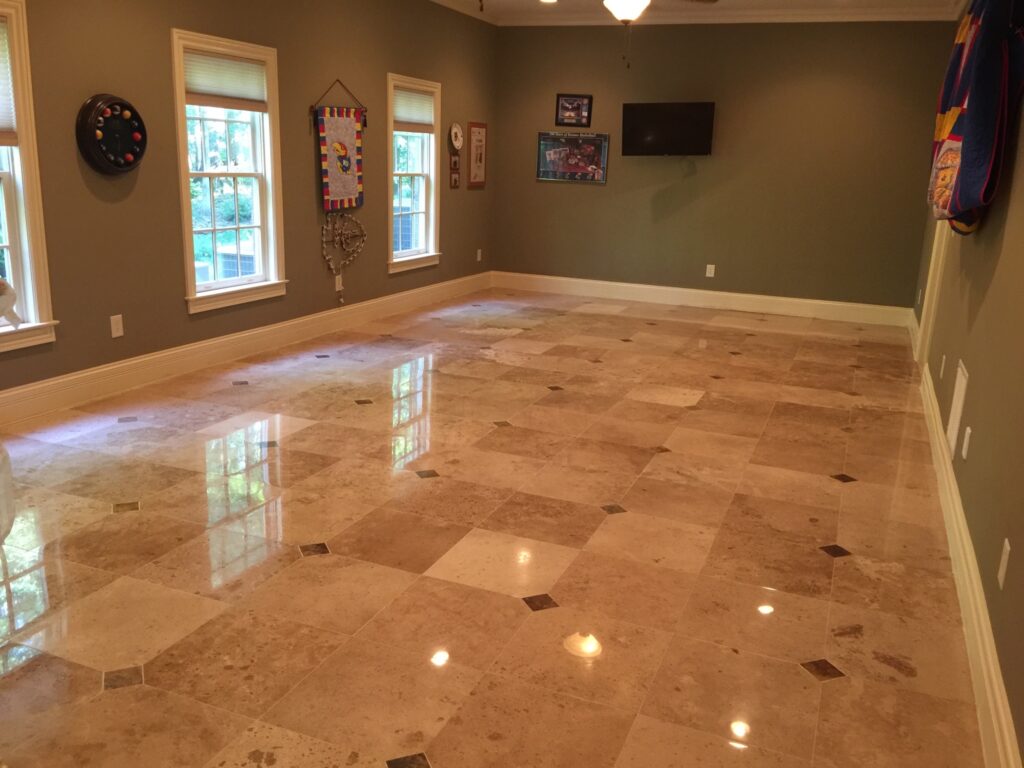
Yes, epoxy floors can be installed in cold weather in Georgia, provided the concrete temperature, humidity, and curing conditions meet the coating manufacturer’s requirements. Many conventional epoxy products require concrete temperatures of at least 50°F to 55°F, while specially formulated cold cure epoxies may be suitable for lower temperatures.
For homeowners and business owners researching epoxy floor cold weather Georgia installation, the biggest concern is not simply the outdoor temperature. It is the temperature of the concrete slab and whether the coating can cure properly.
In Atlanta, Milton, Athens, and surrounding Georgia communities, winter temperatures can make garage floor and commercial epoxy installations more challenging. Cold concrete slows the curing process, while moisture and condensation can interfere with adhesion.
At Buckhead Stone Care, we help homeowners and commercial property owners plan epoxy flooring projects based on their space, concrete condition, and seasonal installation requirements.
This guide explains the minimum temperature for epoxy flooring, how cold weather affects curing, and what to consider when scheduling a winter installation in Georgia.
What Is the Minimum Temperature for Epoxy Floor Installation?
Many standard epoxy floor coatings require a minimum concrete surface temperature of approximately 50°F to 55°F.
However, every product has its own application requirements. Some epoxy systems need warmer conditions, while specialty cold cure formulations can be applied at lower temperatures.
The manufacturer’s technical data sheet should always determine whether a coating can be safely installed.
Here is a general guide to epoxy floor installation temperatures.
| Concrete Temperature | Installation Considerations |
|---|---|
| 70°F to 85°F | Suitable for many standard epoxy systems |
| 60°F to 70°F | Often suitable with normal or moderately extended curing |
| 50°F to 60°F | Some standard systems are suitable, but curing may slow |
| 35°F to 50°F | Usually requires a product specifically rated for colder conditions |
| Below 35°F | Requires careful product selection and temperature control |
These ranges are general examples, not universal application limits.
For instance, Sika’s Sikafloor 219 UTE technical specifications identify a minimum substrate temperature of 50°F and explain that cooler conditions reduce workability and slow curing.
The most important rule is to follow the coating manufacturer’s specified temperature range rather than relying only on the weather forecast.
Why Concrete Temperature Matters More Than Air Temperature
One of the most common mistakes during cold weather epoxy floor installation is checking the air temperature without measuring the concrete.
Concrete changes temperature more slowly than the surrounding air.
For example, the air inside a garage may reach 65°F during the afternoon while the concrete slab remains significantly colder after a freezing night.
If the slab is below the product’s minimum application temperature, the epoxy may not flow, bond, or cure as intended.
Areas Most Likely to Have Cold Concrete
Some sections of a building may be colder than others.
These include:
- Areas near garage doors
- Concrete along exterior walls
- Unheated garages and workshops
- Warehouse loading docks
- Spaces exposed to drafts
- Concrete slabs with little insulation
Professional installers measure the concrete surface temperature across the work area before applying the coating.
They may also evaluate ambient temperature, humidity, and dew point to determine whether installation conditions are suitable.
Learn more about Buckhead Stone Care’s professional epoxy flooring services for residential and commercial spaces.
How Does Cold Weather Affect Epoxy Floor Cure Time?
Cold weather generally slows the chemical reaction that allows epoxy to harden.
Epoxy flooring is created by mixing resin and hardener. Once combined, these materials react to form a durable coating.
Lower temperatures reduce the rate of this reaction, which can extend the time needed before the floor is ready for foot traffic, vehicles, or equipment.
Typical Epoxy Floor Cure Time
The following table provides general planning estimates for conventional epoxy coatings installed under suitable conditions.
| Curing Stage | Typical Time in Moderate Conditions | Cold Weather Considerations |
|---|---|---|
| Dry to the touch | 12 to 24 hours | May take longer |
| Light foot traffic | Approximately 24 hours | May require additional time |
| Moving equipment or furniture | Approximately 48 hours | May require additional time |
| Vehicle traffic | 72 hours or longer | May be delayed several days |
| Full chemical cure | Approximately 5 to 7 days | May take longer depending on temperature |
Actual timelines vary significantly between products.
Some fast curing systems are ready much sooner, while conventional products exposed to cooler temperatures may require extended curing.
For example, Epoxy.com’s installation guidance provides different return to service stages for light traffic, heavy traffic, and full chemical cure.
What Happens If You Use an Epoxy Floor Too Soon?
Walking or parking on a floor before the coating has developed sufficient hardness may cause:
- Tire impressions
- Surface indentations
- Scuffs and scratches
- Damage from heavy equipment
- Premature coating wear
A floor may feel dry to the touch while the underlying epoxy is still curing.
That is why homeowners should follow their installer’s recommended schedule instead of assuming the floor is ready based on appearance.
Why Humidity and Dew Point Matter During Winter Installation
Temperature is not the only concern when installing epoxy floors in cold weather.
Humidity and condensation can also affect the finished coating.
Understanding Dew Point
Dew point is the temperature at which moisture in the air begins to condense onto a surface.
If a concrete slab is too close to the dew point, moisture may form on the floor even when the surface does not appear visibly wet.
Applying epoxy over condensation can cause:
- Reduced adhesion
- Cloudy or uneven finishes
- Surface discoloration
- Blushing
- Premature coating failure
Many coating manufacturers require the concrete surface to remain at least 5°F above the measured dew point during application and an appropriate portion of the curing process.
For example, Sika specifies this separation for certain epoxy flooring products to reduce condensation risks.
Why This Matters in Georgia
Georgia winters can bring cool mornings, rain, and changing humidity levels.
An unheated garage may experience significant temperature changes between nighttime and afternoon.
Even when the daytime temperature seems suitable for epoxy installation, the concrete may still be too cold or close to the dew point.
A professional installer considers these conditions before starting work.
How Professionals Install Epoxy Floors in Cold Weather
Successful cold weather epoxy installation requires proper preparation, product selection, and temperature management.
Here are the main steps involved.
1. Inspect the Concrete Surface
The contractor evaluates the concrete for cracks, moisture concerns, existing coatings, and other issues that could affect adhesion.
This helps determine whether the surface needs repairs before installation.
2. Measure Concrete and Air Temperature
Before applying epoxy, installers check the temperature of the concrete slab and surrounding environment.
The measurements must fall within the selected product’s application requirements.
3. Prepare the Concrete Properly
Concrete preparation may involve diamond grinding, removing contaminants, and repairing damaged areas.
Even when temperatures are suitable, inadequate surface preparation can lead to coating failure.
Buckhead Stone Care provides floor preparation and leveling services to help create a suitable surface for flooring installations.
4. Maintain Suitable Temperatures
If a space requires heating, the concrete may need additional time to warm up.
Simply raising the air temperature shortly before installation may not be enough.
Installers may need to maintain controlled conditions before, during, and after coating application.
5. Use Appropriate Heating and Ventilation
Temperature control must be done safely.
Unvented combustion heaters can introduce moisture and combustion byproducts that may affect certain epoxy finishes.
Appropriate heating equipment and ventilation should be selected according to the coating requirements and jobsite safety procedures.
6. Allow Adequate Curing Time
Once the epoxy is installed, the space must remain within the required curing conditions.
Turning off the heat too soon or allowing the slab temperature to fall below the product’s limits can interfere with curing.
The installer should provide specific instructions for when the floor can safely return to service.
Can You Install Epoxy Garage Floors During a Georgia Winter?
Yes. Epoxy garage floor installation is possible during Georgia winters when conditions are suitable.
However, unheated garages require additional planning because concrete can stay cold even after outdoor temperatures begin to rise.
Heated Garages
Heated garages generally provide more predictable installation conditions.
If the concrete, air temperature, humidity, and moisture levels meet the coating requirements, installation may be possible throughout the winter.
Unheated Garages
Unheated garages may require more careful scheduling.
During colder periods, the contractor may recommend:
- Waiting for a suitable weather window
- Using a product rated for colder temperatures
- Safely controlling the garage temperature
- Extending the curing schedule
- Selecting a different coating system when appropriate
For homeowners in Atlanta and nearby Georgia communities, professional evaluation helps determine whether the floor is ready for installation.
The goal is to achieve reliable performance rather than rush the project during unsuitable conditions.
Are Polyaspartic Coatings Better Than Epoxy in Cold Weather?
Some polyaspartic coatings are designed to cure faster and operate across a wider temperature range than conventional epoxy systems.
This can make them useful for garage floors, commercial spaces, and projects where installation time is limited.
However, not every polyaspartic product is approved for freezing conditions.
The correct application temperature depends on the manufacturer and formulation.
Epoxy vs Polyaspartic in Cold Weather
| Feature | Standard Epoxy | Polyaspartic Coating |
|---|---|---|
| Cold weather application | Often requires moderate temperatures | Some products permit lower temperatures |
| Cure speed | Usually slower | Often faster |
| Working time | Often longer | Can be shorter |
| UV resistance | Varies, with many epoxies prone to yellowing | Generally good for suitable formulations |
| Garage applications | Common | Common |
| Commercial applications | Common | Common |
Polyaspartic systems can be useful when a quicker return to service is important.
However, surface preparation, moisture conditions, and product compatibility remain essential.
What About Cold Cure Epoxy?
Cold cure epoxy products are specially formulated for installation at lower temperatures.
Some systems permit application near freezing conditions when all manufacturer requirements are met.
These products can be useful for unheated facilities and projects where maintaining standard installation temperatures is difficult.
The best choice depends on the concrete condition, expected traffic, available installation window, and desired finish.
Best Time of Year to Install Epoxy Floors in Georgia
Epoxy flooring can be installed during different seasons, provided environmental conditions are suitable.
However, each season presents different considerations.
Spring
Spring often brings moderate temperatures that are suitable for many epoxy products.
Rainfall and changing humidity still need to be considered.
Summer
Georgia summers provide warm temperatures that can accelerate epoxy curing.
However, excessive heat can reduce working time and make some coatings harder to apply.
High humidity and hot concrete surfaces may also affect product selection and installation scheduling.
Fall
Fall often provides favorable conditions for epoxy flooring installation because temperatures are typically moderate.
However, cooler nights may require additional temperature monitoring.
Winter
Winter installations are possible, particularly in heated buildings or during suitable weather conditions.
Unheated garages and outdoor spaces may need specialized products or additional temperature control.
The best time to install epoxy flooring is when the concrete, air temperature, humidity, and curing conditions meet the selected system’s requirements.
Cold Weather Epoxy Flooring for Commercial Properties
Cold weather epoxy installation is not limited to residential garages.
Commercial properties in Georgia may also need flooring projects completed during cooler months.
Common applications include:
- Warehouses
- Commercial workshops
- Automotive service facilities
- Retail spaces
- Office interiors
- Manufacturing facilities
- Storage areas
Heated commercial interiors can often maintain more consistent conditions than unheated garages or loading areas.
However, the project schedule must account for preparation, coating application, curing, and return to service.
Businesses may also need to coordinate installation around operating hours or planned closures.
For project budgeting, read our guide on commercial epoxy flooring cost in Atlanta.
What Happens If Epoxy Is Installed When It Is Too Cold?
Applying conventional epoxy below its approved temperature range can create serious installation problems.
Slow or Incomplete Curing
The epoxy may remain soft or tacky longer than expected.
Under unsuitable conditions, the coating may fail to reach its intended properties.
Poor Surface Appearance
Cold conditions can affect how epoxy flows and levels.
This may result in uneven finishes or visible application defects.
Adhesion Problems
Improper curing, condensation, or unsuitable concrete conditions may contribute to bonding failures.
Reduced Durability
A coating that has not cured correctly may be more vulnerable to traffic damage, abrasion, or chemical exposure.
Expensive Repairs
If a floor fails because it was applied outside the recommended conditions, repairs may require removing affected material and reinstalling the coating.
Working with an experienced contractor helps reduce these risks through proper testing, preparation, and product selection.
How to Prepare Your Garage for Winter Epoxy Flooring Installation
Homeowners can take several steps before a scheduled cold weather epoxy installation.
- Clear the garage. Remove vehicles, shelving, storage boxes, and other items from the work area.
- Discuss heating requirements. Ask your installer whether the garage needs temperature control before or after installation.
- Identify moisture problems. Mention any history of water intrusion, damp concrete, or flooding.
- Plan alternative parking. Your garage may be unavailable for several days depending on the coating system.
- Follow curing instructions. Do not place items or vehicles on the floor until the contractor confirms it is ready.
- Keep the work area accessible. Make sure installers can safely bring in preparation equipment and materials.
These steps help make installation more efficient while protecting the finished flooring system.
Epoxy Floor Cold Weather Georgia FAQs
Can You Install Epoxy Floors in Winter in Georgia?
Yes. Epoxy flooring can be installed during winter in Georgia when the concrete temperature, humidity, and curing conditions meet the manufacturer’s requirements. Some projects may require heating or specialized cold cure products.
What Is the Lowest Temperature for Epoxy Floor Installation?
Many conventional epoxy coatings require a concrete temperature of approximately 50°F or higher. Specialty cold cure formulations may permit installation at lower temperatures. Always check the specific product’s technical data sheet.
How Long Does Epoxy Take to Cure in Cold Weather?
Epoxy generally cures more slowly in colder temperatures. A system that normally reaches full cure in several days may require additional time during cooler conditions. The exact schedule depends on the product and temperature.
Will Epoxy Cure at 40 Degrees?
Some specialty epoxy formulations are designed to cure at temperatures around 40°F, but many standard products are not. The manufacturer’s specified minimum temperature must be followed.
Does Cold Weather Make Epoxy Flooring Weaker?
Properly cured epoxy can perform as intended even when installed during colder weather. However, applying epoxy outside its approved temperature range or failing to maintain suitable curing conditions can reduce performance.
Is Polyaspartic Better Than Epoxy for Winter Garage Floors?
Polyaspartic can be a good option for winter projects because certain formulations cure faster and tolerate lower temperatures. However, the right system depends on the specific product, concrete condition, and installation requirements.
Can You Use a Heater to Cure Epoxy Flooring Faster?
Suitable temperature control can help epoxy cure according to its intended schedule. However, excessive heat or unsafe heating equipment can cause problems. Heating methods should follow the manufacturer’s recommendations and installer guidance.
Does Humidity Affect Epoxy Flooring in Winter?
Yes. Condensation can form when concrete temperatures approach the dew point. Moisture on the surface may interfere with epoxy adhesion and appearance. Installers monitor temperature and humidity to reduce this risk.
What Happens If Epoxy Freezes Before It Cures?
Exposure to temperatures below the product’s approved curing range can interfere with the chemical reaction and may result in incomplete curing or coating damage. A contractor should evaluate the floor before it returns to service.
Is Fall or Winter Better for Epoxy Flooring in Georgia?
Both seasons can be suitable. Fall often provides more moderate temperatures, while winter projects may need additional temperature control or specialized products. The best installation window depends on actual jobsite conditions.
Schedule Professional Epoxy Floor Installation in Georgia
Planning an epoxy floor cold weather Georgia project does not mean you have to wait until spring.
With the right coating system, proper concrete preparation, and suitable temperature control, epoxy flooring can be installed during cooler months.
At Buckhead Stone Care, we provide concrete flooring and restoration services for residential and commercial properties across Atlanta, Milton, Athens, and surrounding Georgia communities.
Our team evaluates concrete conditions and project requirements to recommend a suitable installation approach.
Whether you are planning a residential garage floor, commercial epoxy coating, or warehouse flooring upgrade, proper preparation and curing are essential for long term performance.
Explore our completed flooring projects or learn more about our epoxy floor installation services.
Ready to upgrade your concrete floors this winter?
Call 678-446-6560 or contact Buckhead Stone Care to request an estimate and discuss the best installation schedule for your project.